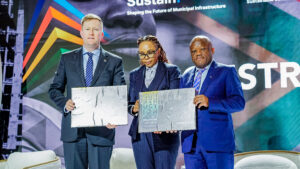
Johannesburg, 25 February 2025 – In a landmark initiative aimed at fostering inclusive economic development, the University of Johannesburg (UJ), in collaboration with Infrastructure South Africa (ISA), has unveiled the Local Government Inclusive Growth Index (LGIGI). This transformative tool will help municipalities identify socio-economic disparities and implement targeted strategies to drive equitable growth.
The LGIGI arrives at a critical time, as South African municipalities continue to grapple with stark inequalities in wealth distribution, service delivery, and economic opportunity. Professor Daniel Meyer, the study’s lead researcher, describes the index as a “game-changer”, offering deeper insights beyond traditional economic measures like GDP.
Key Findings
The study reveals a national inclusive growth index improvement from 41.5 in 1995 to 52.9 in 2023, reflecting an annual growth of 0.99%. Gauteng leads with the highest provincial index at 62.6, while KwaZulu-Natal lags at 48.3. Among metros, the City of Johannesburg emerged as the best performer (65.8), while Buffalo City recorded the lowest score (56.3).
A Tool for Inclusive Development
Aligned with President Ramaphosa’s call for inclusive growth, the LGIGI is set to become an essential tool for policymakers, community leaders, and local governments. By pinpointing inequalities, municipalities can develop data-driven solutions to enhance economic participation and improve the quality of life for all South Africans.
ISA remains committed to supporting evidence-based policymaking and strengthening municipal governance. The launch of the LGIGI marks a significant step toward achieving the United Nations Sustainable Development Goals, particularly those focused on reducing inequality and fostering sustainable economic progress.
For more information on the LGIGI and its impact on South Africa’s municipalities, visit https://news.uj.ac.za/news/uj-research-study-unlocks-municipality-potential-with-inclusive-growth-index-to-tackle-inequality/